Article · 4 min read
Teach your dog the Quest scent
Before starting a Quest, give your dog a short chance to learn the scent they are searching for. This is called scent imprinting. It simply means teaching your dog: this smell is important, and finding it earns a reward.
What you need
- Your dog on lead
- Small, high-value treats or a favourite toy
- The scent source provided at the park
- 1–2 quiet minutes before starting the search
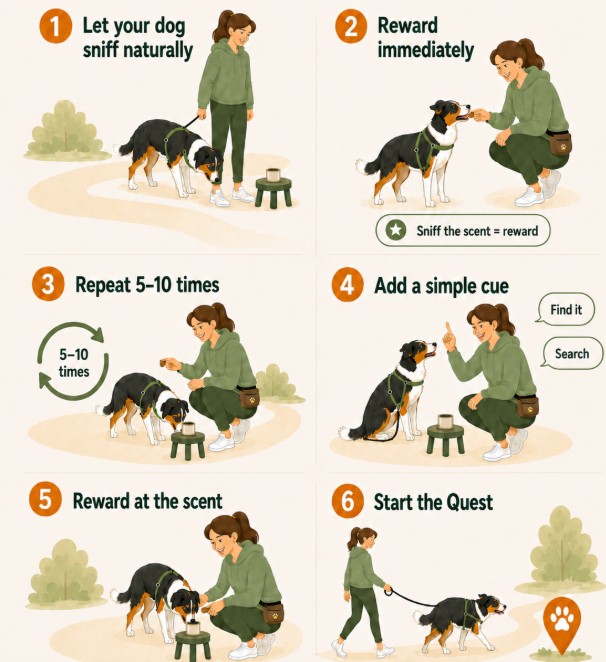
Step 1: Let your dog sniff naturally
Bring your dog close to the scent source and let them investigate it at their own pace.
Do not push their nose into it. Just allow them to sniff.
Step 2: Reward immediately
As soon as your dog sniffs or shows interest in the scent, reward them straight away.
The timing matters. Your dog should learn:
Sniff the scent = reward
Step 3: Repeat a few times
Let your dog sniff the scent source again, then reward again.
Repeat this about 5–10 times. Keep it quick, positive, and easy.
Step 4: Add a simple cue
After a few repetitions, you can say a simple phrase before letting them sniff, such as:
“Find it” or “Search”
Use the same cue each time so your dog starts to understand that the game is beginning.
Step 5: Reward at the scent
When your dog shows interest in the scent, reward them close to the scent source.
This helps them understand that the reward comes from finding the smell, not from looking back at you or walking away.
Step 6: Start the Quest
Once your dog is showing clear interest in the scent, start your Quest and let them begin searching.
For new dogs, keep the first search easy. The aim is not to test them. The aim is to help them succeed.
Key tip
Keep the first session short. A good scent imprinting session should feel easy and rewarding for your dog.
A few successful sniffs are better than a long, confusing session.
Common mistakes to avoid
- Do not force your dog's nose onto the scent.
- Do not wait too long before rewarding.
- Do not expect a perfect sit, paw, or indication at the start.
- Do not make the first search too difficult.
- Do not keep repeating the exercise if your dog loses interest.
When your dog is ready
Your dog is ready to start searching when they:
- Sniff the scent source willingly
- Show interest in the scent
- Expect a reward after smelling it
- Stay engaged and happy
Over time, your dog will become faster and more confident at recognising the Quest scent.